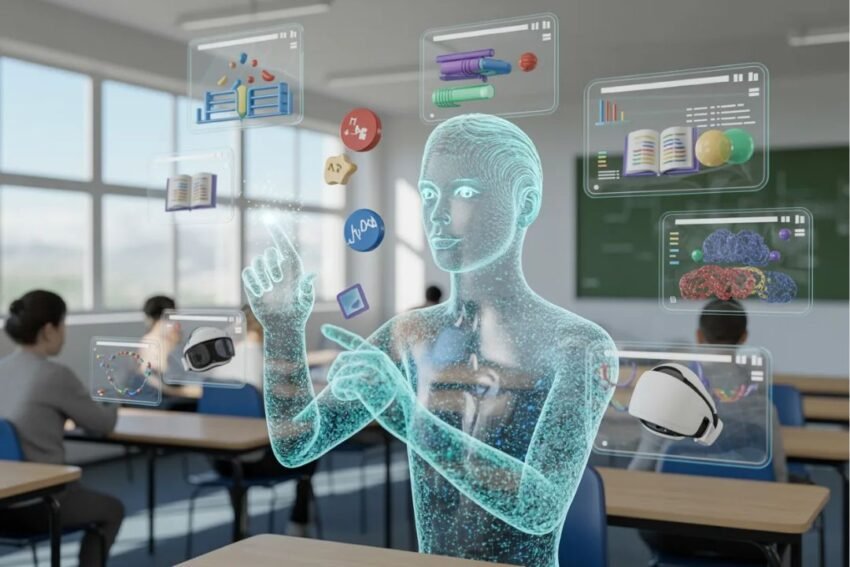
Artificial Intelligence (AI) is rapidly transforming the landscape of education, bringing new possibilities for both teaching and learning. In today’s digital era, traditional teaching methods are being enhanced by intelligent systems that promote interactivity, engagement, and efficiency. AI is not only changing how educators deliver content but also how students absorb, understand, and apply knowledge.
This article explores how AI is making teaching and learning more interactive and effective, highlighting its key applications, benefits, and future potential.
The Need for Interactive and Effective Learning
Education has long relied on standardized teaching approaches, where students passively receive information. However, this model often fails to address individual learning needs and can lead to disengagement.
Modern learners require dynamic, engaging, and personalized experiences. AI meets this demand by transforming passive learning into active participation, ensuring that students are not just consuming information but interacting with it.
AI-Powered Interactive Learning Tools
AI introduces a wide range of tools that enhance classroom interactivity and student engagement.
Smart Content and Multimedia Integration
AI enables the creation of interactive content, including videos, simulations, and quizzes. These elements make learning more engaging and help students better understand complex concepts.
Interactive content adapts to student responses, providing instant feedback and encouraging deeper exploration of topics.
Virtual Reality (VR) and Augmented Reality (AR)
When combined with AI, VR and AR create immersive learning environments. Students can explore historical events, conduct virtual science experiments, or visualize complex mathematical concepts in 3D.
This hands-on approach significantly improves comprehension and retention.
Personalized and Adaptive Learning
One of AI’s most powerful features is its ability to personalize learning experiences.
Real-Time Adaptation
AI systems analyze student performance in real time and adjust lessons accordingly. If a student struggles with a concept, the system provides additional support, explanations, and practice exercises.
Individual Learning Paths
Each student follows a customized learning journey tailored to their abilities and goals. This ensures that learning remains both challenging and achievable.
Enhancing Classroom Engagement
AI tools are designed to actively involve students in the learning process.
Gamification
AI-driven gamification introduces elements such as points, rewards, and challenges into education. These features motivate students and make learning enjoyable.
Interactive Assessments
Traditional exams are being replaced or supplemented by interactive assessments that provide immediate feedback. AI evaluates responses and offers suggestions for improvement, helping students learn from their mistakes.
Intelligent Tutoring Systems
AI-powered tutoring systems provide personalized support to students, enhancing both interaction and effectiveness.
One-on-One Learning Experience
These systems simulate individual tutoring sessions, adapting explanations to suit each student’s learning style.
Continuous Feedback
Students receive instant feedback on their performance, allowing them to identify and correct errors quickly.
AI for Teachers: Smarter Teaching Strategies
AI is not just beneficial for students—it also empowers teachers to deliver more effective instruction.
Automated Administrative Tasks
AI automates tasks such as grading, attendance tracking, and lesson planning. This saves time and allows teachers to focus on teaching and student interaction.
Data-Driven Insights
AI provides detailed analytics on student performance, helping teachers identify trends, strengths, and areas that need improvement. This enables more informed and targeted teaching strategies.
Collaborative Learning Through AI
AI fosters collaboration among students, making learning more interactive.
Group Learning Platforms
AI-powered platforms facilitate group projects, discussions, and peer-to-peer learning. These systems can match students based on their skills and interests.
Global Connectivity
Students can collaborate with peers from around the world, gaining diverse perspectives and enhancing their learning experience.
Improving Learning Outcomes
The interactive and personalized nature of AI-driven education leads to better results.
Higher Retention Rates
Engaging and interactive content helps students retain information more effectively.
Better Understanding
AI ensures that students fully grasp concepts before moving on, reducing learning gaps.
Increased Motivation
Gamified and interactive elements keep students motivated and committed to their studies.
Accessibility and Inclusivity
AI is making education more inclusive by addressing diverse learning needs.
Assistive Technologies
AI-powered tools such as speech recognition, text-to-speech, and language translation support students with disabilities and language barriers.
Flexible Learning Environments
Students can access AI-driven learning platforms anytime and anywhere, making education more flexible and accessible.
Challenges of AI in Interactive Learning
While AI offers numerous benefits, it also presents certain challenges.
Dependence on Technology
Over-reliance on AI tools may reduce critical thinking and human interaction if not balanced properly.
Data Privacy Concerns
AI systems require access to student data, raising concerns about privacy and security.
Implementation Costs
Integrating AI into education systems can be expensive, especially for institutions with limited resources.
The Future of Interactive Learning with AI
The role of AI in education will continue to expand, bringing even more innovative solutions.
Advanced Immersive Experiences
Future AI systems will create highly immersive learning environments that simulate real-world scenarios.
Emotional AI
AI will be able to detect student emotions and adjust teaching methods accordingly, creating a more responsive learning experience.
Lifelong Learning
AI will support continuous education, helping individuals acquire new skills throughout their lives.
Conclusion
Artificial Intelligence is transforming education by making teaching and learning more interactive and effective. Through personalized learning, intelligent tutoring, gamification, and data-driven insights, AI is creating a more engaging and efficient educational experience.
While challenges such as data privacy and accessibility must be addressed, the potential benefits of AI in education are immense. By embracing AI technologies, educators and institutions can create dynamic learning environments that empower students and prepare them for the future.
As education continues to evolve, AI will play a central role in shaping a smarter, more interactive, and inclusive learning system—one that meets the needs of every learner and maximizes their potential.